
Tech
Top 10 Upcoming Phones in May 2025: Flagships, Foldables & Game-Changers!


The smartphone market is buzzing with excitement as we step into May 2025. From cutting-edge flagships to next-gen foldables and value-packed performance phones, brands like Samsung, Motorola, OnePlus, Realme, and POCO are gearing up to launch some seriously impressive devices. Whether you’re a power user looking for the ultimate specs or someone who values sleek design and smart features, this month has something for everyone.
In this blog, we’ve compiled the Top 10 most anticipated smartphone launches of May 2025 — complete with confirmed specs, expected pricing, and what makes each one special. From the ultra-slim Samsung Galaxy S25 Edge to the beastly POCO F7 and the futuristic Motorola Razr 60 Ultra, we’ve covered it all.

1. CMF Phone 2 Pro – Launching April 28
The CMF Phone 2 Pro continues the hype of last year’s CMF Phone 1 with significant upgrades. Powered by the MediaTek Dimensity 7300 Pro, this phone is designed to impress budget-conscious users looking for high-end features. It features a sleek dual-tone design available in vibrant colors and sports a powerful triple-camera setup identical to the Nothing Phone 3A — a 50MP main sensor, an 8MP ultrawide lens, and a 50MP telephoto with 2x optical zoom.
One of the biggest improvements is the inclusion of essential accessories in the box — a charger and case, addressing last year’s criticism. Another highlight is the addition of the “essential key,” a customizable hardware button similar to that on the Nothing Phone series. With a rumored price of Rs18,999, it could be a value-packed alternative to more expensive mid-rangers. Fans are hoping CMF hits the sweet spot in pricing while keeping up the promise of performance and design. The launch is just around the corner — April 28th — so stay tuned!
2. Moto H60 Pro – Launching April 30
Motorola is stepping up its game with the Moto H60 Pro, which arrives as the successor to the highly appreciated H50 Pro. One of the main criticisms of the previous model was its average performance and slow storage. With the H60 Pro, Motorola addresses that directly — it comes packed with the Dimensity 8350 chip, LPDDR5X RAM, and UFS 4.0 storage, all of which contribute to significantly improved speed and multitasking.
Design-wise, the phone retains a curved display like the H60 Fusion and brings a better ultra-wide camera. There’s also a new side button introduced, most likely customizable for quick tasks, much like the Nothing Phone 3’s feature. One major upgrade that users will love is the massive 6,000 mAh battery, which means it’ll easily last through a busy day — or more.
The H60 Pro is also expected to include AI-driven features to enhance the user experience across photography, performance, and even UI interaction. Despite all these upgrades, fans are hoping that Motorola retains a competitive price tag. The phone is launching on April 30th, and it’s shaping up to be one of the strongest contenders in the upper mid-range segment.
3. Samsung Galaxy S25 Edge – Launching May 13
Samsung is redefining slim with the Galaxy S25 Edge, set to launch on May 13. This device might just be the thinnest smartphone Samsung has ever made, with an ultra-slim profile of just 5.84mm and weighing only 166g. Despite its lightweight build, it doesn’t compromise on flagship features.
The phone boasts a beautiful 6.6-inch 2K LTPO Super AMOLED display — perfect for media consumption and multitasking. On the back, you’ll find a dual camera setup featuring the same primary sensor as the S25 Ultra, which means you can expect high-end photography capabilities in a sleeker form factor.
Samsung has equipped it with a 4,000 mAh battery. While that might seem small, the use of power-efficient components and software optimization might still provide solid battery life. It’s likely to sit in the premium price segment, but the slim design and flagship-grade display may be enough to justify it.
If you’ve been craving a powerful yet ultra-lightweight Android flagship, the Galaxy S25 Edge is one you’ll want to watch. Expect more reveals and teasers leading up to its mid-May debut.
4. Samsung Galaxy F56 – Launching Late May
Joining the May lineup is another Samsung device — the Galaxy F56. Essentially a rebranded version of the Galaxy M56, the F56 is expected to launch toward the end of May, and will be sold exclusively on Flipkart (while the M56 is Amazon-exclusive).
The phone features a 6.74-inch AMOLED panel with Full HD+ resolution, thin bezels, and a 120Hz refresh rate for smooth visuals. Under the hood, you’ll find the new Exynos 1480 chipset paired with UFS 3.1 storage — ensuring quick app launches and efficient multitasking. Powering the device is a reliable 5,000 mAh battery with 45W fast charging support.
While the design and core specifications are nearly identical to the M56, the F56 will likely be offered in exclusive colorways and bundled deals specific to Flipkart. For buyers looking for a good balance between performance, battery life, and display quality under ₹25,000, this phone could be a smart pick.
Samsung’s dual-launch strategy with similar models on different platforms continues, and the F56 could be a hit among students and working professionals alike.
5. Motorola Razr 60 Ultra – Launching Mid-May
Motorola is gearing up to make a major splash in the foldable market with the Razr 60 Ultra, expected to launch in mid-May. This flagship foldable builds on the foundation of last year’s Razr lineup with a series of meaningful upgrades that make it a strong competitor against Samsung’s Z Flip and Oppo’s Find N Flip.
The Razr 60 Ultra boasts a slightly larger 7-inch internal foldable display with even slimmer bezels, offering a more immersive experience. It’s also getting a significant camera boost, with a new 50MP selfie sensor, which is a big upgrade for content creators and video call users. Under the hood, it packs the mighty Snapdragon 8 Elite processor, 16GB RAM, and a jaw-dropping 1TB storage option — perfect for power users.
One of the standout improvements is the 4700 mAh battery, paired with faster charging support. Motorola is also introducing a customizable AI action button and fresh new color options. With this model, the brand is clearly positioning the Razr 60 Ultra as a full-fledged flagship foldable, not just a trendy flip phone. If priced right, this could be one of the most desirable foldables in 2025.
6. Motorola Razr 60 – Launching Last Week of May
For those who love the flip-phone form factor but don’t want to break the bank, Motorola will also be launching the vanilla Razr 60 by the end of May. While it may not have all the bells and whistles of the Ultra model, it still packs enough punch to impress foldable fans.
The Razr 60 comes with a slightly smaller internal battery at 4500 mAh, which is still generous for a foldable. It’s powered by the newly announced Dimensity 7400X, offering a balanced mix of performance and efficiency. While details about the camera setup aren’t fully revealed yet, we can expect incremental upgrades in image quality along with software-based improvements.
Design-wise, the Razr 60 retains the iconic Razr look but introduces new color variants to appeal to younger audiences. The software will likely include Motorola’s signature AI features and a customizable smart action button, making it versatile despite its relatively lower cost.
7. iQOO Neo 10 – Launching in May (Date TBA)
The iQOO Neo 10 is expected to hit the Indian market in May 2025, likely as a rebranded version of the Neo 10 Pro that launched in China. Known for pushing boundaries in the performance segment, iQOO is aiming to dominate the mid-range and gaming smartphone space with this beast of a phone.
The Neo 10 features a blazing-fast Dimensity 9400 processor, paired with UFS 4.0 storage and up to 12GB of RAM, making it a multitasking and gaming powerhouse. The display is a stunner — a 6.78-inch 144Hz LTPO AMOLED panel, offering ultra-smooth visuals and vibrant colors for everything from gaming to Netflix binges.
Battery life is another strong point. The phone houses a 6,100 mAh battery with 120W fast charging, which can fully juice up your phone in minutes. On the camera front, iQOO promises a solid setup, likely with a 50MP primary sensor and supporting lenses.
With a projected price of around ₹30,000, the Neo 10 is shaping up to be a performance king in its segment. Whether you’re a gamer or a power user on a budget, this one should definitely be on your radar.
8. Realme GT60 – Launching End of May
Realme is all set to make a strong comeback in the premium mid-range segment with the launch of the Realme GT60. As the successor to the highly popular GT50, this phone is expected to feature notable upgrades in nearly every department.
Under the hood, the GT60 will be powered by the all-new Snapdragon 8s Gen 4, an upgrade from last year’s 7 Plus Gen 3, offering better CPU and GPU performance while being more efficient. The phone will also feature a vibrant 1.5K AMOLED display, ensuring vivid colors and sharp visuals.
Photography is also getting a major bump with a 200MP main sensor, which could rival flagship phones in daylight and high-resolution shots. Realme is also introducing 100W fast charging, allowing you to top up your battery in under 30 minutes — perfect for users always on the move.
Though full details are still under wraps, the GT60 is expected to hit the market by the end of May. If priced around ₹35,000–₹40,000, it could be one of the best value-for-money phones of 2025.
9. POCO F7 – Launching in May
The POCO F7 is finally coming to India, and it’s making waves before it even hits the shelves. Rumored to be a rebranded version of the Redmi Turbo 4 Pro, this phone brings an aggressive design, flagship-level hardware, and a focus on value — staying true to POCO’s brand identity.
The device will feature a 1.5K AMOLED display with ultra-thin bezels and a high refresh rate for fluid interactions. Under the hood, you get the new Snapdragon 8s Gen 4 chipset, paired with a massive 7,550 mAh battery — the biggest in its class. Fast charging is equally impressive, with 90W wired and 22.5W reverse wireless charging support, something rarely seen in this price range.
Camera specs are expected to be competitive, though not its main focus. The F7 will directly go up against the Realme GT60, and with POCO’s fan base and price-aggressive strategy, it could disrupt the market once again. The official price hasn’t been confirmed, but expect it to be in the ₹30K–₹35K bracket.
10. OnePlus 13T – Launching April 24 in China
The OnePlus 13T is a much-awaited compact powerhouse set to launch first in China on April 24, and it’s expected to arrive in India soon after. Designed for those who want flagship power in a compact frame, the 13T features a 6.3-inch 1.5K LTPO AMOLED display — small by 2025 standards but perfect for one-handed use.
OnePlus has included a dual 50MP camera setup, with both the main and telephoto sensors promising flagship-level photography. Instead of the traditional alert slider, the 13T introduces an “action button” which can be programmed for various shortcuts and tasks — a first for OnePlus devices.
Powering the device is the Snapdragon 8 Elite, backed by a 6,000+ mAh battery, all packed into a frame that weighs under 200 grams. It’s light, powerful, and ideal for users who prefer a compact yet capable phone.
Pricing is still under wraps, but considering OnePlus’ recent trend, expect it to be in the ₹45,000–₹50,000 range. If you’re a fan of compact flagships, the 13T might just be the phone of the year for you.
Final Thoughts
May 2025 is shaping up to be one of the most exciting months for smartphone enthusiasts. Whether you’re into foldables, compact flagships, or powerhouse performers, there’s something new launching for everyone. Which one are you most excited for?
.


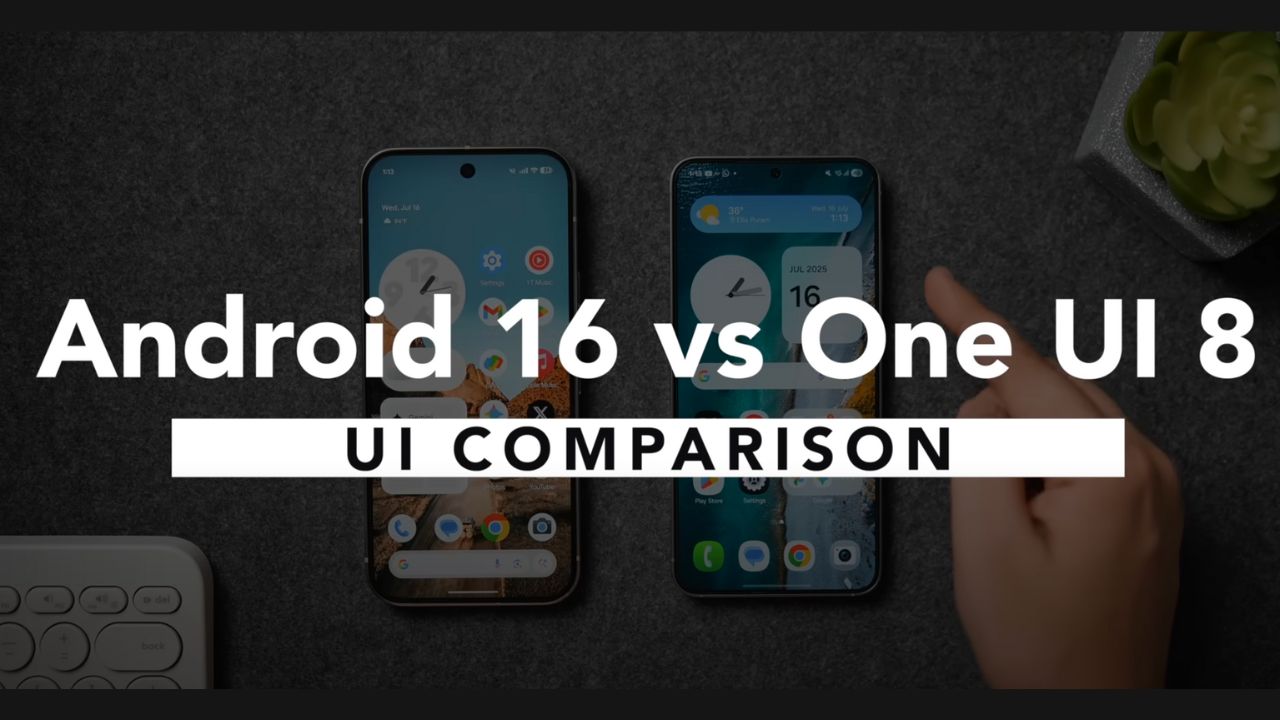
When it comes to Android, users are typically on one side of the line when it comes to a growing pool of OEMs offering their unique skin on top of stock Android – (stock) Google Pixel experience vs feature-rich Samsung One UI. In 2025, in Android 16 with Material 3 Expressive vs Samsung One UI 8 on the Galaxy S25 series. So which is the better user experience? Let’s compare everything from lock screen customizations to widgets, animations, and artificial intelligence features.
Lock Screen Customization – Samsung Takes the Lead
Android 16 (Pixel 9 Pro)
Neat design, with subtle animations
Few clock face options (no new ones since Android 14)
Shape-based wallpaper effects (rain, fog, sun, etc.)
Live animation transitions between the lock screen and home screen
Restrictive sizing for components
One UI 8 (Samsung Galaxy S25)
Complete resize-able and movable clocks
AI-generated Dynamic Clock, that adjusts to the wallpaper shape
AI awarding suggestions for the lock screen
Now panel: live music, score tracker for sports, voice note, and timer
More default clock options that are animated and flashy
✅ Winner: One/UI 8 – Offers more creative possibilities and useful features
Home Screen Experience
Icons & Theming
- Pixel UI: Minimalist, consistent themed icons, though a bit outdated
- One UI 8: Slightly modern icons, improved customization with Good Lock
Widgets
| Feature | One UI 8 | Android 16 (Pixel UI) |
|---|---|---|
| Widget Resizing | Custom sizes, 1×2 to 4×4+ | Limited resizing |
| Aesthetic Design | Cohesive with UI | Basic Material 3 styling |
| Functionality | Rich with controls | Simpler and static |
✅ Winner: One UI 8 – More functional and beautifully integrated widgets
App Drawer & Quick Settings Panel
Android 16 introduces a blurred background in the app drawer and quick settings to modernize the appearance.
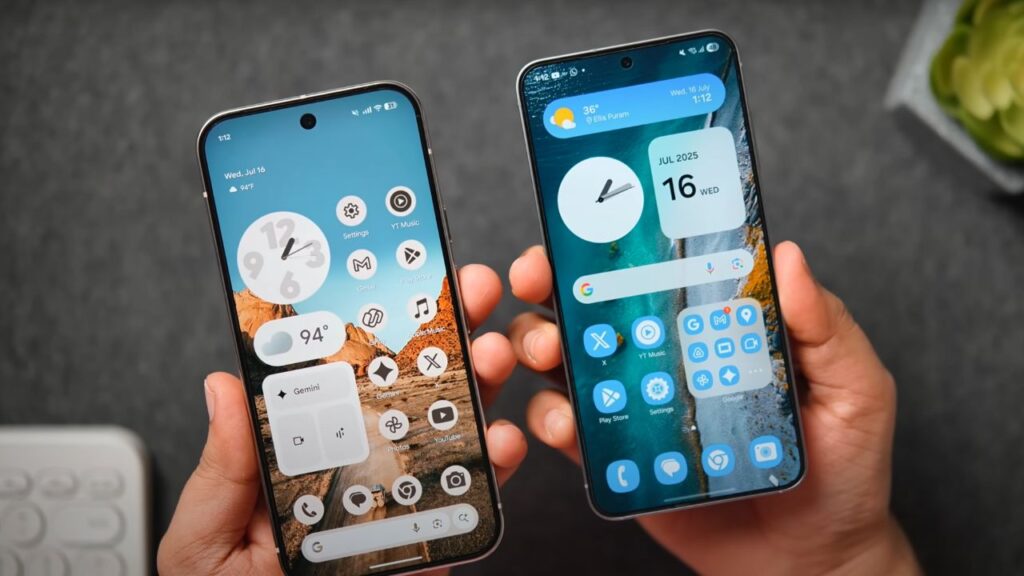
One UI 8 allows for both horizontal and vertical scrolling, customizable layout, and enhanced ordering (custom/alphabetical).
Both UIs support tile repositioning and layout adjustments, but Samsung’s panel looks more polished.
Also Read: Vivo X200 FE vs iPhone 16: The Compact Flagship Android
✅ Winner: One UI 8 – Siemens Cleaner, and flexibility in design
Customization & Visual Tweaks
Android 16
Material You design (Material 3 Expressive)
New wallpapers features live effects ( animations based on weather, temperature etc. )
Slightly interactive toggles and sliders
Toggle jiggly animation when toggling on/off
One UI 8
GoodLock for insane levels of customization
Modify recent apps interface, animation, quick settings…
Cleaner and more elegant UI layout
✅ Winner: One UI 8 – Deeper user friendly customization out of the box
Animations & Haptics
Android 16: Interactive animations, solid haptic feedback but a little jittery due to single sequential animations
One UI 8: Animated transition, polished gestures, customizable with Good Lock
✅ Winner: Tie – Pixel’s more interactive, but Samsung’s has smoother animations.
AI Features – Who’s Smarter?
| AI Feature | One UI 8 (Samsung) | Android 16 (Pixel) |
|---|---|---|
| Lock Screen Suggestions | ✔️ AI-driven | ❌ Not available |
| Dynamic Clock AI | ✔️ Shape-aware clock | ❌ None |
| AI Live Activities (Now) | ✔️ Cricket, Music, Voice, etc. | ❌ Limited live info |
| Voice Translation / AI Tools | ✔️ Samsung AI Assistant | ✔️ Gemini AI, Circle to Search |
✅ Winner: One UI 8 – More meaningful day-to-day AI implementation
Final Verdict – One UI 8 or Android 16?
| Category | Winner |
|---|---|
| Lock Screen | One UI 8 |
| Home Screen | One UI 8 |
| Widgets | One UI 8 |
| App Drawer | One UI 8 |
| Quick Settings Panel | One UI 8 |
| Animations & Haptics | Tie |
| AI Features | One UI 8 |
| Software Cleanliness | Android 16 |
✅ Overall Winner: One UI 8
While Android 16 brings visual enhancements and smoother animations, Samsung’s One UI 8 simply offers more: better customization, smarter features, cleaner UI, and more control. With Good Lock support and rich system-level personalization, Samsung delivers the most polished and user-centric Android experience in 2025.
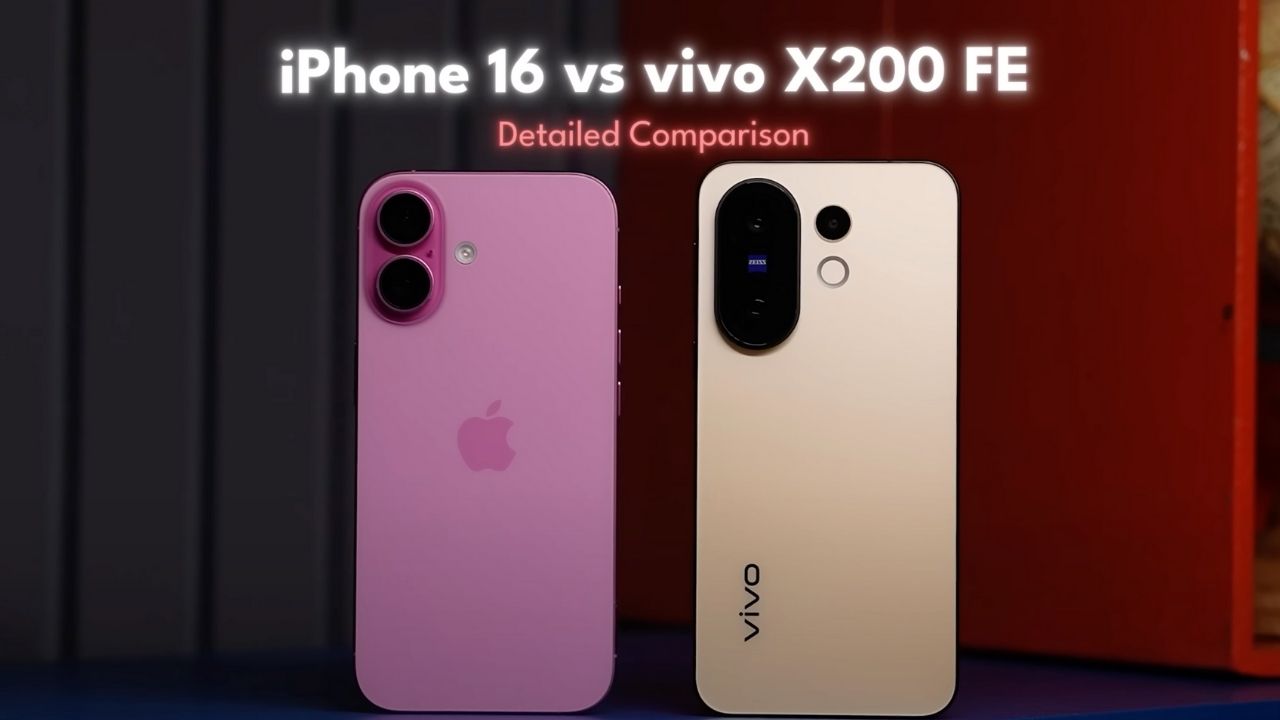
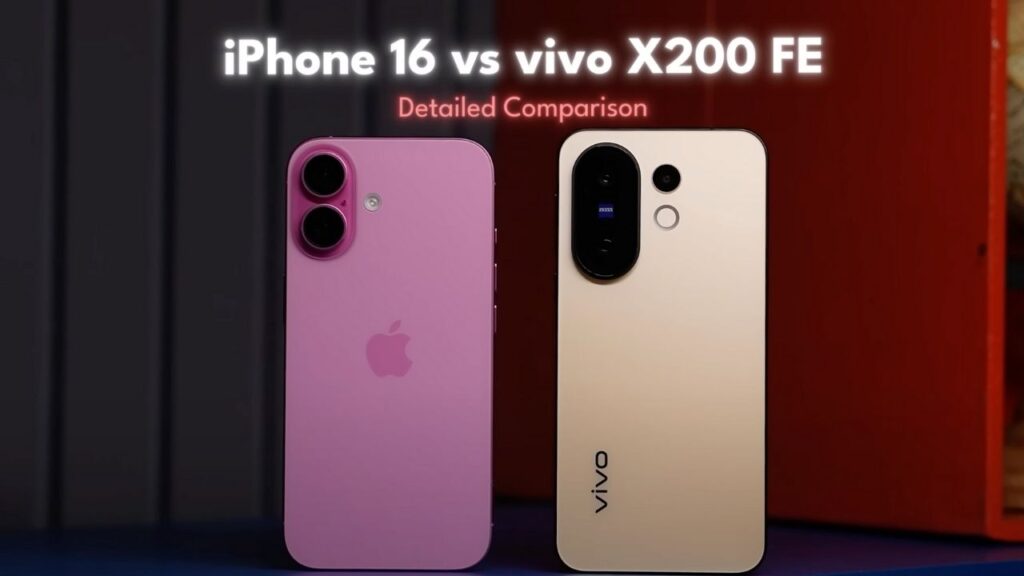
In a world where iPhones dominate the premium space, the Vivo X200 FE comes in hot—offering better hardware, a lower price, and practical features that even the iPhone 16 skips. But can it actually outshine Apple’s compact powerhouse? Let’s break down the full comparison.
Design & Build: Inspired, Yet Better?
The Vivo X200 FE takes visual cues from the iPhone 16 with flat sides and a sleek in-hand feel. But unlike the iPhone’s Ceramic Shield, Vivo uses Schott Sensation Core, which holds up better against scratches. It also carries a more modern IP69 rating (vs iPhone’s IP68), giving it an edge in ruggedness.
Feature Vivo X200 FE iPhone 16 Display Glass Schott Sensation Core Ceramic Shield 2.0 Water Resistance IP69 IP68 Weight < 200g Lighter Extra Buttons — Action + Camera Button In-box Accessories Case + Charger Included None
Battery & Charging: Vivo Leads the Pack
The X200 FE wins hands down in this department. With a larger battery and 90W fast charging, it offers up to 8 hours of screen-on time. In contrast, the iPhone 16 maxes out around 6.5 hours and takes over 90 minutes to charge.
Display: 120Hz LTPO vs 60Hz OLED
This is where the gap widens. The iPhone 16, in 2025, still uses a 60Hz OLED panel, while Vivo equips the X200 FE with a 120Hz LTPO AMOLED, 3000 nits peak brightness, and 2160Hz PWM dimming for better eye comfort.
Feature Vivo X200 FE iPhone 16 Size 6.31” 6.1” Refresh Rate 120Hz LTPO 60Hz Peak Brightness 3000 nits Brighter outdoors HDR Support HDR10+ Dolby Vision PWM Dimming 2160Hz Not specified
Audio & Haptics: iPhone Still Wins
While the X200 FE offers stereo speakers and high-res Bluetooth codecs (LDAC, LHDC), the iPhone 16’s speakers sound fuller, and its haptic feedback remains unmatched thanks to Apple’s Haptic Engine.
Performance & Storage
- iPhone 16: Powered by the A18 chip, leading in CPU benchmarks
- Vivo X200 FE: Runs on MediaTek Dimensity 9300+, excellent GPU stability, and better thermal management
What’s more impressive is that Vivo offers 12GB RAM and 256GB base storage, whereas iPhone sticks to 8GB RAM and 128GB in the base variant.
Gaming Comparison
- BGMI: iPhone capped at 60FPS due to display
- Vivo X200 FE: Supports 120FPS gameplay, cooler surface temps, and more consistent frame rates in Genshin Impact
However, the iPhone supports console-level games like Resident Evil Village and Assassin’s Creed Mirage via App Store, which Android lacks.
Camera Showdown: More Versatile on Vivo
Vivo features a triple-camera system, including a dedicated telephoto lens, while iPhone sticks to a dual-lens setup.
| Camera Feature | Vivo X200 FE | iPhone 16 |
|---|---|---|
| Main Sensor | 50MP + Zeiss Color Modes | 24MP |
| Zoom Capabilities | 3x Optical, 10x Digital | 2x In-Sensor Crop |
| Low-Light Performance | Better Brightness & Detail | More Neutral Look |
| Ultrawide Camera | 8MP | 12MP + Macro Mode |
| Selfie Camera | Great in low light | Better color accuracy |
| Video Quality | 4K60 (Main + Front) | 4K60 + HDR Support |
Verdict: Vivo wins in photography; iPhone dominates in videography.
Software: Apple Ecosystem Still Reigns
- iPhone 16 runs iOS 18 / iOS 26 Developer Beta
- Vivo X200 FE runs FunTouch OS 15 (Android 15)
While Vivo promises 4 years of updates, Apple is expected to deliver 6–7 years. iOS still offers a more refined UI, better app support, and exclusive ecosystem features like MagSafe, Dynamic Island, and Apple Intelligence (AI suite).
AI Features Compared
| AI Features | Vivo X200 FE | iPhone 16 |
|---|---|---|
| AI Editing | AI Eraser, Live Cutout, Photo Enhance | Image Playground, Genmoji |
| Assistant | Google Gemini, Circle to Search | Apple Intelligence |
| Translation | AI Call Translator | Visual Lookup, Siri Smart Tasks |
Final Verdict: Is Vivo X200 FE the Better Deal?
If you care about:
- Hardware value
- High refresh rate display
- Photography versatility
- Faster charging & better battery life
- Lower price (₹49,999 vs iPhone’s ₹79,990)
Then the Vivo X200 FE is the better buy. However, if you want unmatched software experience, ecosystem integration, and best-in-class video, the iPhone 16 still wins in refinement.

iOS 26 Preview – Apple Goes Bold with Liquid Glass, Smarter AI, and More!

One UI 8 vs Android 16 – Which Offers the Best Android Experience in 2025?

Vivo X200 FE vs iPhone 16: The Compact Flagship Android Users Shouldn’t Ignore in 2025

iQOO Neo 10 Unboxing & First Impressions—Power-Packed Performer Under ₹30,000!

Motorola edge 60 fusion is here – The most premium phone @20,999*

CMF Phone 2 Pro: Premium Features at an Affordable Price in 2025
-
 Tech10 months ago
iQOO Neo 10 Unboxing & First Impressions—Power-Packed Performer Under ₹30,000!
-
 Tech11 months ago
Motorola edge 60 fusion is here – The most premium phone @20,999*
-
 Tech11 months ago
CMF Phone 2 Pro: Premium Features at an Affordable Price in 2025
-

 Auto Mobile10 months ago
Top Upcoming 7-Seater Hybrid Cars in India – Fortuner, Ertiga, Triber & More
-

 Tech11 months ago
Vivo T4 5G Unboxing & First Impressions ⚡ A Beast with 7300mAh Battery & 90W Charging
-

 Tech10 months ago
iPhone 17 Series: Major design change in years 2025—all you need to know
-

 Auto Mobile10 months ago
2025 Kia Carens Clavis – Not Perfect, But Possibly the Best 7-Seater SUV for Indian Families
-

 Tech11 months ago
MotoBook 60 Unboxing & First Impressions: 120Hz OLED, Intel Core 5, 16GB RAM – Is This the Best Laptop Under ₹60,000?